

Tre Colori (hiking experience of three countries)
Suitable for a trip:
From March to late June and from late August to November
What you can expect:
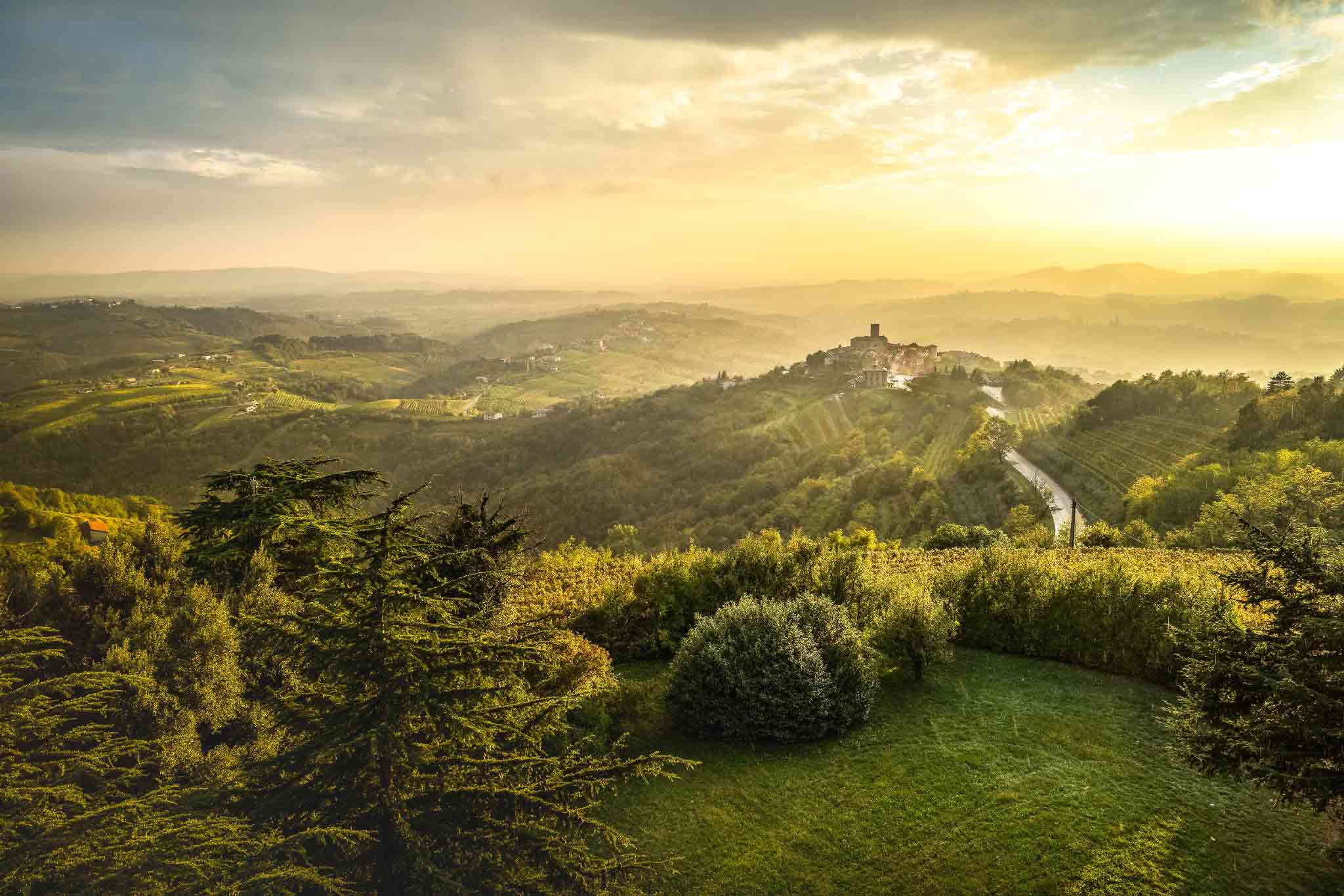
A walking tour from Cividale del Friuli to Pula offers a diverse and enriching experience. Expect to journey through picturesque landscapes, including the stunning Julian Alps, vineyard-covered hills, and limestone karst formations. Along the way, you’ll pass through charming villages, historic towns, and lush forests, offering opportunities for cultural exploration and enjoying the region’s culinary delights.
The route takes you across international borders, showcasing the multicultural heritage of the area, from Italian and Slovenian influences to the unique Istrian culture. You can expect to encounter historical sites, such as Roman ruins, Venetian architecture, and World War I landmarks, which reflect the rich history of the region. This walking tour offers a profound connection to the natural beauty, cultural diversity, and historical significance of the Istrian Peninsula, making it a memorable and immersive journey for travelers who appreciate exploration on foot.
Accommodation:
You will stay in the best hotels in the area with breakfast and dinner.
the price includes:
– 6 x overnights B&B&D (Kobarid, Trieste, Motovun, Bale, Pula)
– Entrance fees (museums, ferry, …)
– Organisation/Guide
– Luggage transfer
the price does not include:
– Lunches and drinks
– Airport transfers
What to have with you:
You should bring sports equipment, some clothes and plenty of good moods 🙂
Duration
7 days
Group size
4-16 participants
Acommodation
Hotels in Kobarid/Tolmin, Goriška Brda, Trieste, Motovun, Bale and Pula.
Min.age restriction
23 years
Language
English, Slovenian
Transport
Your luggage is transported during the whole trip by a supporting van.
PROGRAMME

Day 1: From Cividale del Friuli to Kobarid
Length: 22 km
Cumulative elevation gain: 1500 m
We will start our journey in Italy in Cividale del Friuli. The path will lead us across the border into Slovenia to Kobarid. These two destinations, Cividale del Friuli and the Kobarid Historical Museum, offer a unique blend of history, culture, and natural beauty, making them fascinating places to explore in the heart of Europe.
Cividale del Friuli, Italy: Cividale del Friuli is a UNESCO World Heritage Site in Italy with a rich history dating back to Roman times. It features iconic landmarks like the Lombard-style Tempietto Longobardo and the Devil’s Bridge. The town hosts cultural events like the Palio di San Donato and boasts several museums, including the Museo Cristiano and the National Archaeological Museum.
Kobarid, Slovenia: Historical Museum: Kobarid, a picturesque town in Slovenia, is home to the Kobarid Historical Museum, known for its focus on World War I and the Soča Front. The museum exhibits artifacts, photographs, and documents from the war and honors Ernest Hemingway’s time in the area. Visitors can also enjoy the natural beauty of the Soča River and Triglav National Park while exploring the region.

Day 2: Tolmin – Goriška Brda
Length: 25 km
Cumulative elevation gain: 640 m
The Path of Peace (Pot miru) is a historical trail in Slovenia that stretches from Tolmin to Goriška Brda. This trail commemorates the World War I battles along the Soča Front, where Austro-Hungarian and Italian forces clashed in the rugged terrain. Visitors can explore museums, memorials, and outdoor exhibits that tell the story of the wartime struggles. The journey takes you through a diverse landscape, from the Soča River’s emerald waters to the peaceful vineyards of Goriška Brda. Ultimately, the Path of Peace serves as a poignant reminder of the war’s devastation and a place for reflection and remembrance.

Day 3: Castle Duino – Portopiccolo – Castle Miramare
Length: 17 km
Cumulative elevation gain: 400 m
Castle Duino: Castle Duino (Castello di Duino) is a breathtaking cliffside castle located in Duino, Italy, overlooking the Adriatic Sea. It is famous for inspiring the poet Rainer Maria Rilke to write the “Duino Elegies.” Visitors can explore the historic interiors, art collections, and scenic gardens while enjoying panoramic sea views.
Portopiccolo: Portopiccolo is a luxurious seaside resort on the Adriatic coast, near Sistiana, Italy. This exclusive destination offers upscale accommodations, fine dining, a marina, and a beach club. Guests can indulge in Mediterranean seaside living, complete with stunning sea vistas and modern amenities.
Castle Miramare: Castle Miramare (Castello di Miramare) is a 19th-century castle situated on the Gulf of Trieste, Italy. It was built as a residence for Archduke Ferdinand Maximilian of Austria. The castle is celebrated for its architecture, elegant gardens, and art collections, providing visitors with an opportunity to explore opulent interiors and enjoy scenic views of the Adriatic Sea.
These three locations offer a diverse range of experiences, from the poetic inspiration of Castle Duino to the luxurious coastal lifestyle of Portopiccolo and the historic splendor of Castle Miramare.

Day 4: Grožnjan – Motovun
Length: 19 km
Cumulative elevation gain: 570 m
Grožnjan: Grožnjan is a picturesque hilltop town in Istria, Croatia, known as the “City of Artists” due to its vibrant arts scene and numerous galleries. The town boasts well-preserved medieval architecture and hosts cultural events, including a jazz festival. It was once connected by the Parenzana railway, and parts of the old railway route now serve as scenic walking and cycling paths.
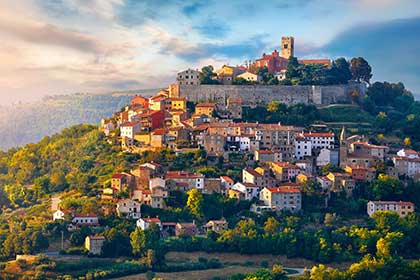
Motovun: Motovun is another stunning hilltop town in Istria, Croatia, surrounded by city walls and offering breathtaking views of the countryside. It is famous for its annual Motovun Film Festival, celebrating international cinema. Motovun, like Grožnjan, was also a stop along the Parenzana railway, and portions of the old rail route now provide walking and cycling opportunities.
Parenzana Railway: The Parenzana was a narrow-gauge railway connecting towns in Istria to Poreč in the early 20th century. While no longer operational, the old rail route has been transformed into the Parenzana Route, an idyllic trail for hikers and cyclists. This trail winds through the picturesque Istrian landscape, passing vineyards and charming villages, such as Grožnjan and Motovun.
These destinations and the Parenzana Route offer a delightful blend of cultural, historical, and outdoor experiences, making them excellent choices for exploring the Istrian region in Croatia.

Day 5: Limski kanal (Lim Bay) – Rovinj – Bale (Villa Menenghetti)
Length: 23 km
Cumulative elevation gain: 200 m
Limski kanal (Lim Bay): Limski kanal, or Lim Bay, is a natural inlet on the Istrian Peninsula, Croatia. This picturesque channel is renowned for its limestone cliffs and stunning landscapes. It’s known for seafood farming and is an ideal spot for nature enthusiasts and seafood lovers alike.
Rovinj: Rovinj is a picturesque coastal town on the Istrian Peninsula, offering a historic old town with charming streets, colorful houses, and the iconic St. Euphemia Church. It’s a hub for the arts and hosts the Rovinj Photodays festival. Rovinj is also a gateway to the stunning Rovinj Archipelago, perfect for water sports and island exploration.
Villa Meneghetti: Villa Meneghetti is a luxurious boutique hotel and winery in Bale, Istria. The estate boasts a 19th-century ambiance and offers high-end accommodations, wine tastings, and tours of the vineyards. Guests can enjoy the serene gardens and savor traditional Istrian cuisine at the on-site restaurant, making it a delightful destination for wine and food enthusiasts.
These destinations, Limski kanal, Rovinj, and Villa Meneghetti, combine natural beauty, cultural charm, and luxury, offering a range of experiences for travelers exploring the Istrian region in Croatia.

Day 6: Villa Meneghetti – NP Brioni – Pula
Length: 28 km
Cumulative elevation: 170 m
Brijuni National Park (Nacionalni park Brijuni): Brijuni National Park is a group of 14 picturesque islands off the Istrian coast, known for their rich biodiversity and historical significance, particularly as a former retreat for Josip Broz Tito. Visitors can explore lush landscapes, exotic animals, and historic sites, making it a unique blend of nature and culture.
Pula: Pula, a coastal city in Istria, Croatia, is famed for its well-preserved Roman heritage, notably the Pula Arena, which hosts cultural events. The city features other Roman relics like the Forum, the Temple of Augustus, and the Arch of the Sergii. Its charming waterfront, lined with cafes and restaurants, offers a delightful place for leisure and dining, making Pula an excellent base for exploring Istria’s attractions.

Day 7: Pula (Cape Kamenjak) – airport
On the last day, we can go to the beautiful beach of Cape Kamenjak to spoil ourselves. After that we drive you to the airport.
Rt Kamenjak, also known as Cape Kamenjak, is a stunning natural reserve at the southern tip of Croatia’s Istrian Peninsula. This area boasts rugged, unspoiled coastline, crystal-clear waters, and numerous coves and beaches. It’s home to diverse flora and fauna, with opportunities for activities like hiking, cycling, snorkeling, and birdwatching. The cape holds historical significance with Roman ruins and archaeological sites. It is also a protected nature park, emphasizing conservation efforts while offering facilities for responsible exploration.