

Pearls of sLOVEnian Alpine region
Suitable for a trip:
From early April to late June and from late August till late October
What you can expect:
Love2move moto is to combine three very important ingredients: food, spectecular views and great company. Delicious food has the power to tantalize the taste buds and ignite the senses, turning every meal into a delightful journey of flavors and textures. Spectacular views, whether overlooking a serene coastline, a majestic mountain range, or a bustling cityscape, can transport us to a world of natural beauty and awe-inspiring sights. When combined with great company, these elements create the perfect recipe for unforgettable moments and lasting memories, where laughter and camaraderie enrich the experience.
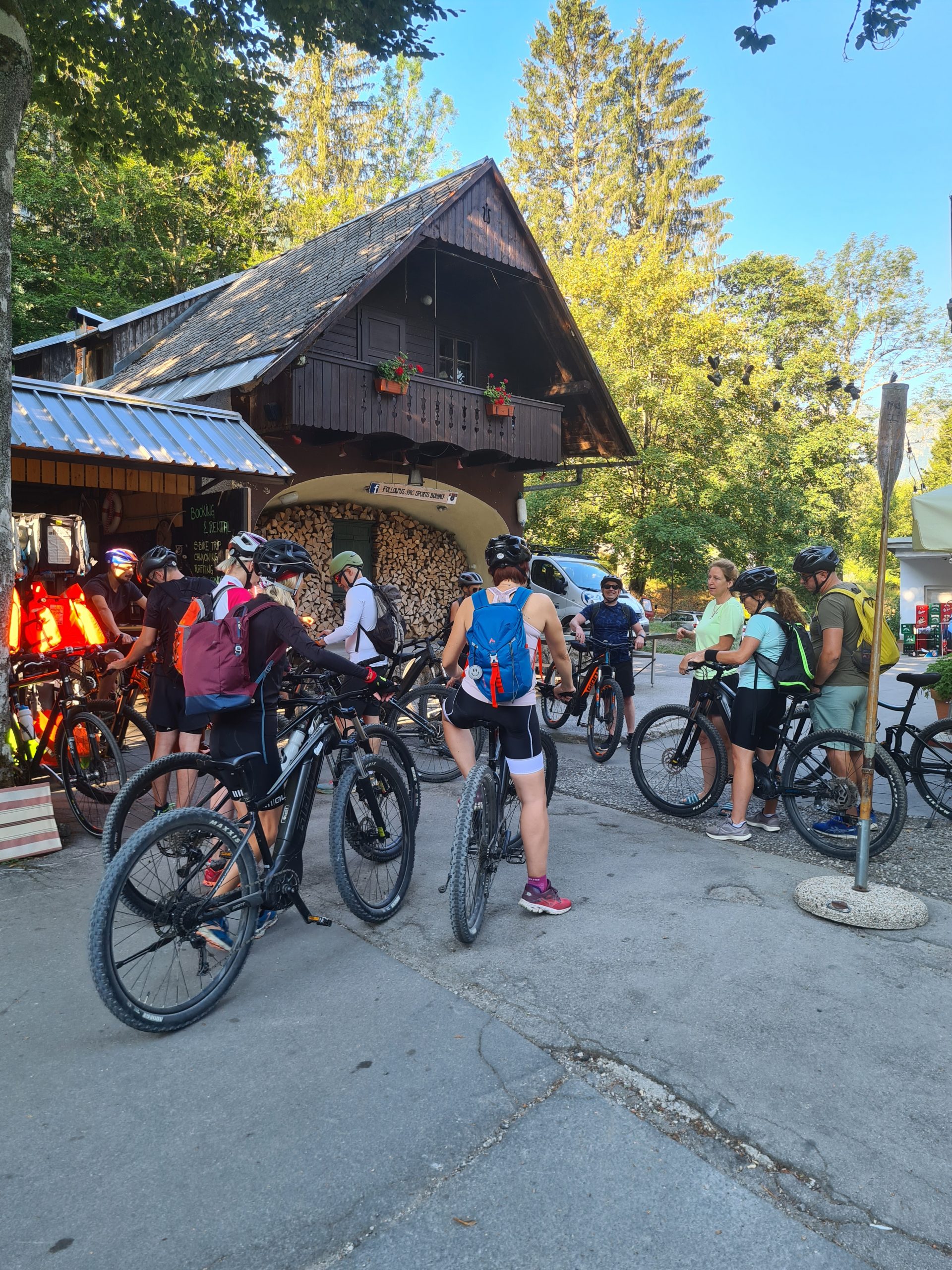
We have organized an exciting seven-day tour with a bike. We will see some of the most beautiful places in Alpine Slovenian region. We will start in Ljubljana the capital of Slovenia. On our journey we will pass one of the oldest settlements in Slovenia – Škofja Loka (Bishop´s Meadow) and village Kropa – the cradle of Slovenian iron forging package, the town of Radovljica (Beekeeping Museum), the famous Bled (Island and a castle), breathtaking valley of Radovna river, Kranjska Gora (famous for skiing world cup races), Vršič pass (a must do for every cyclists in Slovenia) and Bovec (canyoning, rafting, …). The final cycling tour takes us to Goriška Brda also known as Slovenian Tuscany.
Accommodation:
You will stay in the best hotels in the area with a breakfast and dinner. Day 1 overnight in Ljubljana, day 2 – Bled, day 3 – Kranjska Gora, day 4 and 5 – Bovec, day 6 – Goriška Brda.
the price includes:
– 6 x overnights (Ljubljana, Bled, Kranjska Gora, 2 X Bovec, Goriška Brda), bed&breakfast
– Entrance fees (Kropa iron forging museum, Radovljica apiculture museum, Vintgar gorge Bled, Besna Pehta Kranjska Gora, rafting Soča river Bovec, canyoning Sušec stream Bovec)
– Pletna ride in Bled
– Bycicle rental
– Organisation / Guide
– Luggage transfer all seven cycling days
– Transfer Goriška Brda – Ljubljana
the price does not include:
– Lunches and drinks
– Airport transfers
What to have with you:
You should bring sports equipment, some clothes and plenty of good moods 🙂
*Disclaimer – we reserve the right to change the route if necessary.
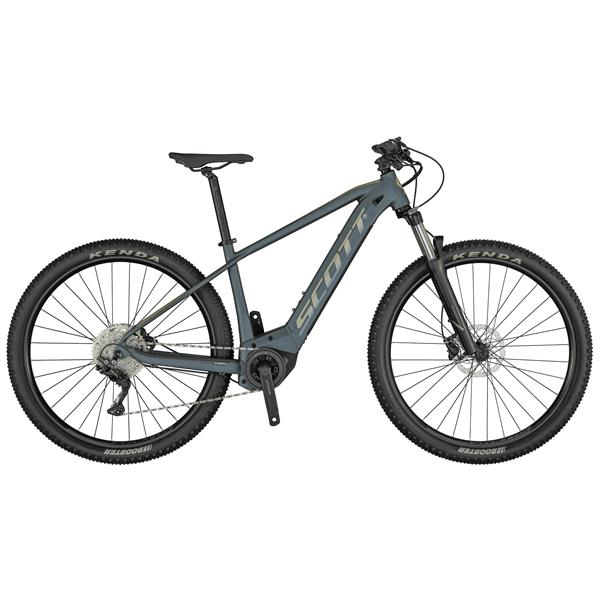
Bikes to rent


Duration
7 days
Group size
4-16 participants
Acommodation
Hotels in Ljubljana, Bled, Kranjska Gora, Bovec and Goriška Brda
Minimum age restriction
23 years
Language
English, Slovenian
Transport
Your luggage is transported during the whole trip by a supporting van.
PROGRAMME

Day 1: Ljubljana (a tour of Ljubljana and its parks)
Length: 30 km
Cumulative elevation gain: 100 m
Ljubljana, the charming capital of Slovenia, is a city that effortlessly combines old-world charm with a vibrant modern atmosphere. As you wander through its picturesque streets, you’ll be captivated by the elegant architecture, colorful façades, and enchanting canals that crisscross the city. Ljubljana Castle perched on a hill offers panoramic views of the city, while the Ljubljanica River winds its way through the heart of town, providing the perfect setting for riverside cafes and a leisurely stroll. This compact and pedestrian-friendly city is a haven for culture enthusiasts with its numerous museums, galleries, and a lively culinary scene featuring local delicacies. Ljubljana’s warm and welcoming ambiance is sure to leave a lasting impression on any traveler.

Day 2: Ljubljana – Bled
Length: 70 km
Cumulative elevation gain: 1100 m
We start our tour in Škofja Loka (Bishop’s Meadow), which is among the most beautiful and oldest settlements in Slovenia. Its evocative Old Town has been protected as historical monument since 1987. When the castle and other old buildings are illuminated on weekend nights, Škofja Loka takes on the appearance of a fairy tale. It gets its name from the bishops of Freising, who were granted ownership of the town by King Otto II of Germany in AD 973. A major trade and craft centre throughout the Middle Ages, the town was hit by an earthquake in 1511 and rebuilt in a uniform, early-Baroque style. More recently, Škofja Loka became famous for its Passion Play, written by a Capuchin friar in 1721 and revived in 1999. Involving hundreds of costumed locals, the play is enacted at Easter every six years.
Soon after Škofja Loka, we will climb Škofjeloka highlands, a sub-region of Slovenian Alps. In addition to pastoral economy, mining and iron industry were the most important economic activities ensuring survival of people living at the foot of mountains. Thanks to rich locations of high quality iron ore, the Julian Alps were a very important strategic area for almost 3,000 years.
We pass small Kropa village, the cradle of Slovenian iron forging.
Both Kropa and the neighbouring village of Kamna Gorica, with their preserved ironworks houses and technical monuments, are among the important Slovenian historical sites. In 1953 Kropa became the first place in Slovenia to be proclaimed a cultural monument.
The town of Radovljica (sometimes shortened to Radol’ca) is filled with charming, historic buildings and blessed with scenic views of the Alp, including Triglav. We will dive into the long tradition of beekeeping in Slovenia and the Carniolan (Slovenian) honey bee. Radovljica’s famous apiculture museum gives us a closer look at the beekeeping in Slovenia. No folk tradition is more Slovenian than that of painting beehive panels. During the mid 1600s, hives were created as shelf-like units allowing bee-keepers to harvest individual honeycombs without damaging the entire hive. Apis mellifera carnica – in Latin, also known as Carniolans, or “Carnies” for short, in English – is autochthonous over a wide area of Central Europe. Slovene beekeepers also fondly call it the “grizzly” because of the bright grey hair along the edges of its abdomen. Its basic characteristics include an excellent sense of orientation, diligence and gentleness. In terms of these features it is superior to all other races of bees.
We end the first day in Bled, popular place for foreign and domestic turists in Slovenia.
With its placid lake, fairy-tale island church, clifftop castle and girdle of grey mountains, Bled has become a visual trademark for the Slovenian tourist industry. It emerged as a popular spa resort in the mid-19th century, but Bled’s key attractions today consist of boat trips to the island church, castle, excursions into the alpine surroundings and – cremeschnitte. Kremna rezina also known as vanilla slice or custard slice, is a custard and chantilly cream cream cake dessert. In Slovenia, kremna rezina is commonly associated with the town of Bled, however, its exact origin is unknown. The name of the dessert means simply “cream slice”. Most locals refer to it as kremšnita, from the German word Cremeschnitte, with the same meaning. As of October 2021, more than 11 million cream cakes have been baked at the hotel’s patisserie since its invention.
Day 3: Bled – Kranjska gora
Length: 49 km
Cumulative elevation gain: 800 m
We start our second day visiting Vintgar gorge. Located just north of Bled, Vintgar gorge is a 2-km (1-mile) long ravine carved by the rushing waters of the Radovna river. It was discovered by chance in February 1891 during a period of unusually low water level in the river. The gorge became a major tourist attraction as soon as it opened in August 1893. Visiting the gorge remains an exhilarating experience as the trail winds along sheer cliffs, passing gurgling rapids and whirlpools, criss-crossing the river on bridges.
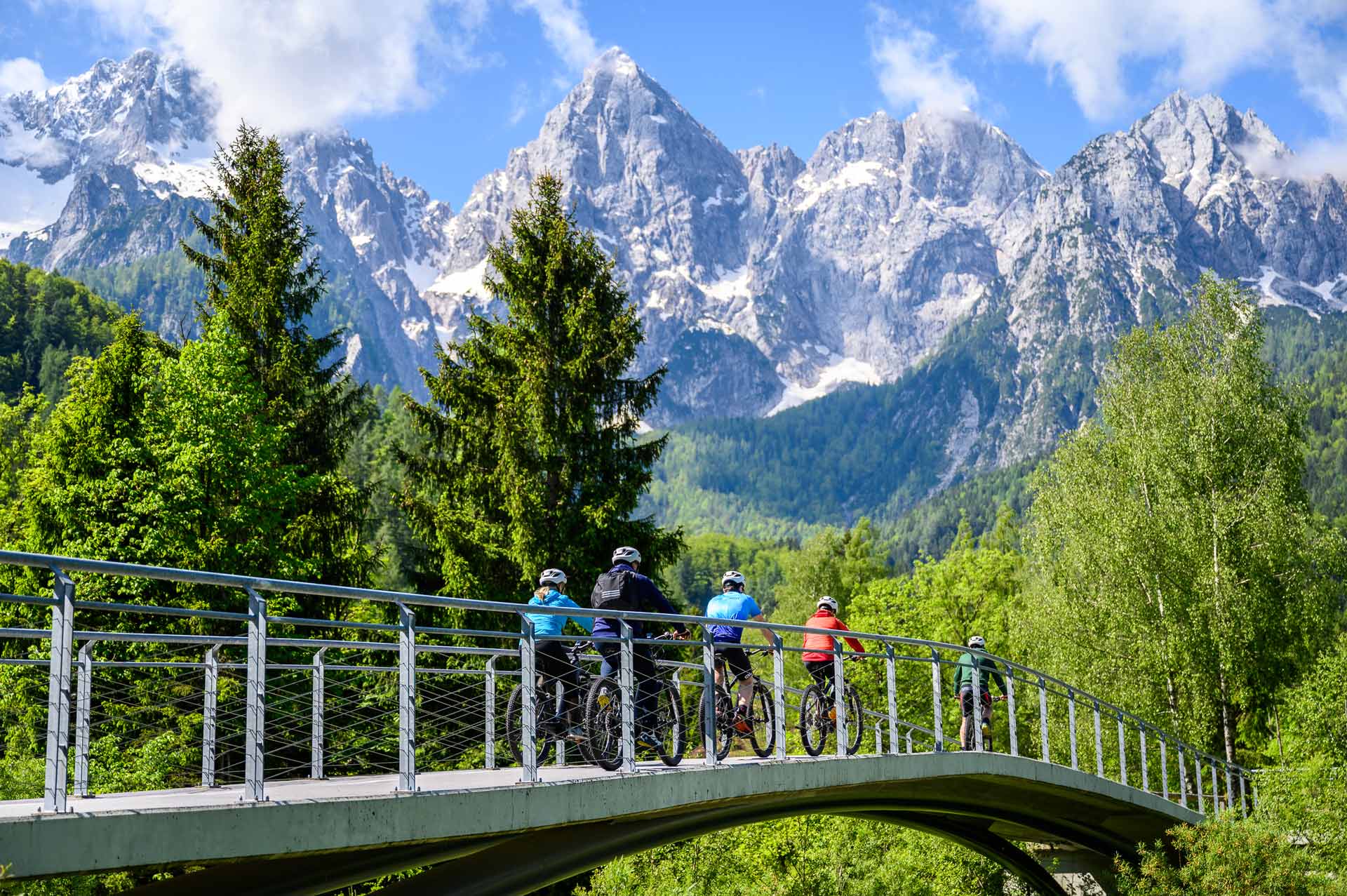
Soon after Vintgar gorge, we enter one of the most beautiful Slovene Alpine Valleys, the Valley of the Radovna River – the meeting point of two glacial valleys, Kot and Krma. The whole area is part of the Triglav National Park natural preserve, which is keeping it shielded from development of mass tourism.
Triglav National Park (TNP) – Triglavski narodni park in Slovenian, is the only national park in Slovenia. It was named after Mount Triglav, a symbol of Slovenia and of Slovene character. Mount Triglav, the highest peak of the Julian Alps, stands almost in the middle of the national park. The proposal for the protection of the Triglav Lakes Valley area was first put forward by the seismologist Albin Belar in 1906 or 1908. Finally, in 1981, Triglav National Park was officially established in the modern form. In 2010, TNP extended once again to include the settlement Kneške Ravne (Tolmin), thus the new park area amounts to 880 km², which is 4% of the area of Slovenia.
After we leave Radovna valley behind, we stick to the bicycle path that follows old railway track connecting Slovenia and Italy.
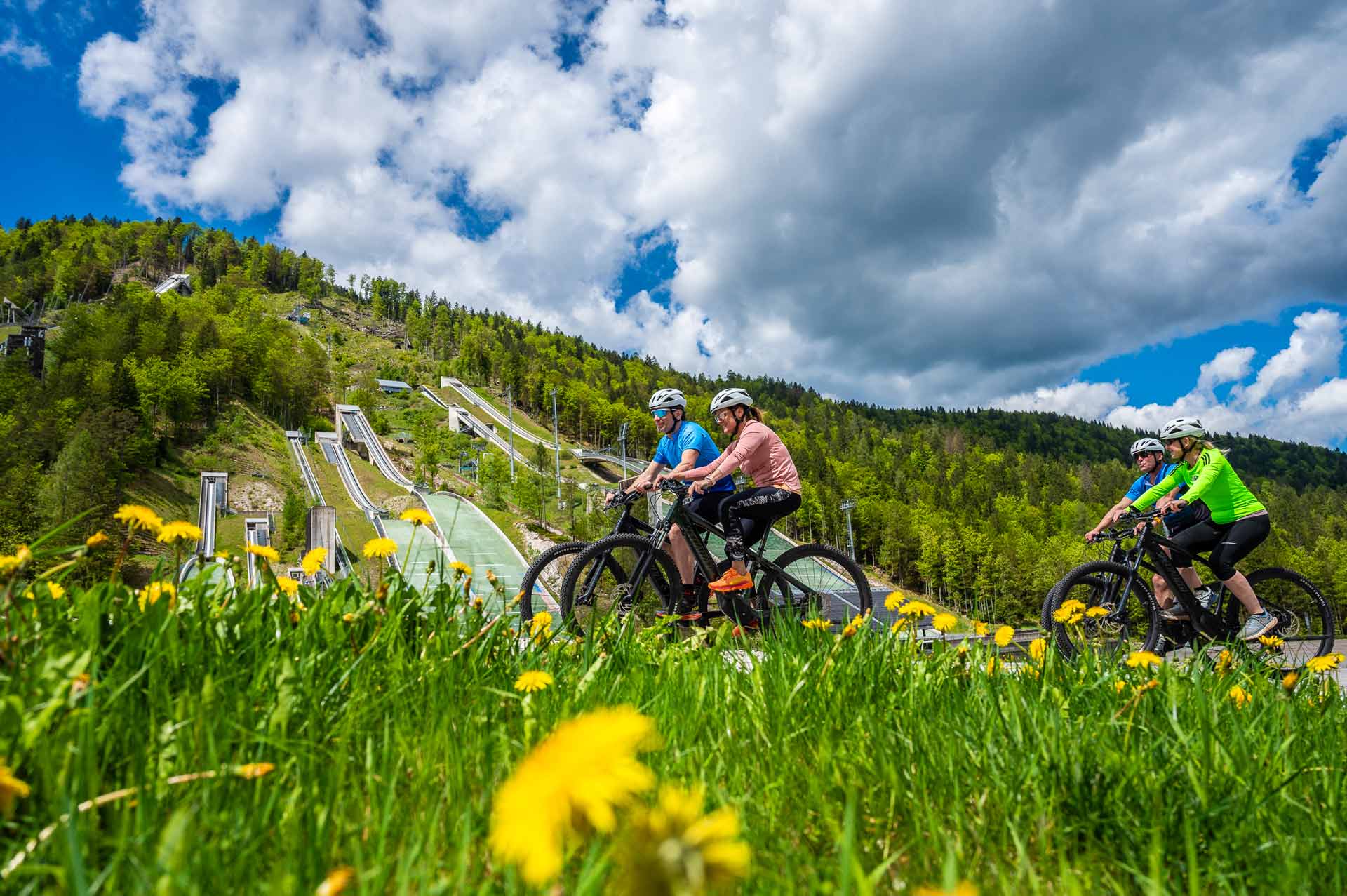
We end our day in Kranjska Gora. Beautifully located in the Sava Dolinka valley beneath jagged alpine peaks, Kranjska Gora is the northern gateway to the Soča Valley. This former dairy village was a key supply base for the Soča Front during World War I. Since the 1930s it has been Slovenia’s premier winter sports playground. In early March, the village hosts the Vitranc Cup in slalom and giant slalom for the ski World Cup. The World Ski-Flying Championship is held at Planica, the world’s highest ski-jumping hill, 3 km (2 miles) to the west. In summer, Kranjska Gora is a popular base for hiking in Triglav National Park.
We will ride down the 1,500-metre-long route of the ‘Furious Pehta’ summer sledge. In only five minutes you can make the 300-metre drop at an incline of up to 67%. Summer sledding is not possible in rainy weather.

Day 4: Kranjska gora – Bovec
Length: 45 km
Cumulative elevation gain: 1000 m
Today we climb legendary Vršič pass, a must-do for every cyclist in Slovenia!
It is the highest pass in Slovenia, as well as the highest in the Eastern Julian Alps. It connects Upper Carniola with the Trenta Valley in the Slovene Littoral. The road across the pass, now known as Russian Road (Ruska cesta), was originally built for military purposes in the early 19th century and followed an earlier trade route. The Slovene common noun vršič literally means ‘little peak’, a diminutive form of the word vrh ‘peak’. The road through the pass rises from Kranjska Gora in a series of 50 hairpin bends, traverses the top of the Vršič Pass, and descends into the Soča Valley. The upper elevations of the road are rendered impassable by heavy snowfall during much of winter. The road was greatly improved in late 1915 to supply the Isonzo Front of World War I. The current name, Russian Road (Ruska cesta), refers to the approximately ten thousand Russian prisoners of war used as laborers in the 1915 construction.
After long descent from Vršič pass, we enter beautiful Soča valley.
Due to its emerald-green water, the river Soča is marketed as “The Emerald Beauty.” It is said to be one of the rare rivers in the world that retain such a colour throughout their length. The river inspired the poet Simon Gregorčič to write his best-known poem Soči (To the Soča), one of the masterpieces of Slovene poetry. This region served as a location for the 2008 Disney film Chronicles of Narnia: Prince Caspian. The river is also well known for the marble trout (Salmo marmoratus); this species is native to rivers of the northern Adriatic basin, and it lives in the upper course of the river.
During World War I, the area was the theatre of the bloody Battles of the Isonzo, fought between Austro-Hungarian forces and the Italian Army between June 1915 and November 1917, which devastated the region almost completely.
Bovec will be our base for next two days.
Day 5: Bovec
Length: by agreement
Cumulative elevation gain:
Today, Bovec is centre for water sports and all other outdoor activities. You name it, you got it – activities around Bovec includes cycling, world-class fishing in Soča river and it’s tributaries, kayaking, rafting, canyoning, hiking (the Peace Trail, the Soča Trail, and the Alpe-Adria Trail), a zip line, skydiving, caving, rock climbing, golf courses, performances by Društvo 1313, cheese tasting on the Mangart Plain, the Kanin circular cableway (highest in Slovenia), karst features,…
And Kobarid, small town in Soča valley, ranked among the highest places on the culinary map of the world, is not far away 😊

Day 6: Bovec – Goriška Brda
Length: 75 km
Cumulative elevation: 1250 m
Nestled in Slovenia’s western landscape, Goriška Brda, often called “Slovenia’s Tuscany,” is a region of enchanting beauty, renowned for its rolling vineyard-covered hills, idyllic villages, rich culinary traditions, and a deep-rooted cultural heritage. Explore charming hamlets with cobblestone streets, savor world-class wines, enjoy outdoor adventures in lush landscapes, and delve into the region’s history by visiting historical sites and attending local festivals. With breathtaking views of vine-covered hills and the distant Julian Alps, Goriška Brda is a captivating destination that embodies the essence of Slovenia’s natural and cultural treasures.

Day 7: Goriška Brda – Ljubljana
On the way back to Ljubljana we can visit to amazing locations. Lipica, the birthplace of the famed Lipizzaner horses, offers visitors a unique opportunity to witness these majestic creatures in action and explore the rich heritage of one of the world’s oldest stud farms, set against the backdrop of the picturesque Karst region. Just a short drive away, the Škocjan Caves beckon with their UNESCO-listed underground wonderland, leading visitors through colossal chambers, intricate stalactites, and the mesmerizing Reka River, showcasing the captivating beauty and geological history of the Karst region’s subterranean landscapes, making Slovenia a treasure trove of natural and cultural wonders.